A herniated disc diagnosis tends to provoke a predictable anxiety. The word ‘herniated’ sounds serious. The description – soft material pushing out of a disc and pressing on a nerve – sounds like something requiring surgical correction. And yet the clinical reality is more reassuring: the large majority of herniated disc cases resolve or significantly improve with appropriately designed non-surgical care.
Understanding what actually happens during natural disc recovery – and what treatment does to support and accelerate that process – gives people dealing with this condition a far more grounded and optimistic perspective than the diagnosis alone provides.
What Happens Inside a Herniated Disc
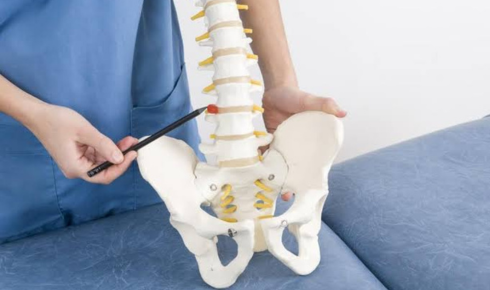
A spinal disc consists of a fibrous outer ring and a gel-like inner core. A herniation occurs when the outer ring develops a tear significant enough that the inner material protrudes through it. This protruded material – which is chemically irritating to neural tissue in addition to being physically compressive – presses against nearby nerve roots, producing the characteristic symptoms of disc herniation: localised back or neck pain combined with neurological symptoms in the affected nerve’s distribution.
The crucial insight for recovery is that this protruded material is not permanently fixed in its new position. The body has processes – including enzymatic resorption and the reduction of inflammatory swelling around the herniation – that can progressively reduce the material’s volume and its pressure on the nerve. Non-surgical treatment is designed to support and accelerate these natural processes.
Symptoms Across Different Spinal Levels
The specific symptoms of a herniated disc depend on which vertebral level is affected and which nerve root is compressed:
Lumbar herniations most commonly affect the L4-L5 or L5-S1 levels, producing pain that radiates into the buttock and leg, sometimes extending to the foot. This is the classic sciatica pattern. Weakness in the foot, calf, or thigh may also be present depending on which nerve root is involved.
Cervical herniations typically affect the C5-C6 or C6-C7 levels, producing arm pain, shoulder discomfort, and neurological changes in the hand and fingers including tingling, numbness, and weakness of grip.
In either location, symptoms that worsen with specific movements – forward bending, coughing, or sneezing for lumbar herniations; neck rotation or looking upward for cervical herniations – reflect the mechanical nature of the nerve compression.
The Non-Surgical Treatment Pathway
Effective Herniated Disc Treatment without surgery combines several complementary approaches into a coherent plan.
Non-Surgical Spinal Decompression Therapy is the centrepiece of disc-specific treatment. By creating controlled, computer-guided traction across the affected spinal segment, decompression therapy reduces the intradiscal pressure that maintains the herniation in its protruded state. As pressure drops, the disc’s natural tendency to retract is supported, and the reduction in nerve compression allows the inflammatory response around the nerve root to begin resolving.
Physiotherapy and Movement Rehabilitation rebuilds the core and spinal stability muscles that protect the disc during everyday activity, and teaches movement patterns – particularly lifting, bending, and sitting transitions – that minimise re-injury risk during recovery.
Manual Therapy addresses the secondary muscular guarding and joint stiffness that develop around the site of a disc herniation. This guarding – the body’s natural attempt to protect an injured structure – can itself contribute to pain and restricted movement after the acute disc injury begins to settle.
At ANSSI Wellness, Herniated Disc Treatment plans are designed around the individual patient’s specific herniation characteristics, neurological presentation, and lifestyle demands. Treatment is precisely calibrated to the level and severity of each case rather than applied generically.
What the Recovery Timeline Looks Like
Herniated disc recovery is not always linear. Many patients experience a gradual reduction in neurological symptoms – tingling, numbness, radiating pain – over four to ten weeks of consistent non-surgical care, with continued improvement extending beyond that as nerve healing proceeds.
Pain improvement typically precedes neurological recovery. Some residual tingling may persist well after the pain has become manageable, reflecting the slower timeline of nerve tissue repair compared to soft tissue healing. Patience and consistency with the treatment programme are essential during this phase.
Conclusion
A herniated disc is a serious but highly treatable condition. For the majority of people, surgery represents a last resort that a well-designed non-surgical programme makes unnecessary. The disc’s capacity for natural recovery, when supported by appropriate decompression, rehabilitation, and lifestyle adjustment, is greater than the diagnosis alone suggests.